Turn measurement into your strongest competitive advantage

Fospha is the Measurement Operating System for retail commerce — delivering daily, ad-level measurement that flows directly into the systems that act on it.
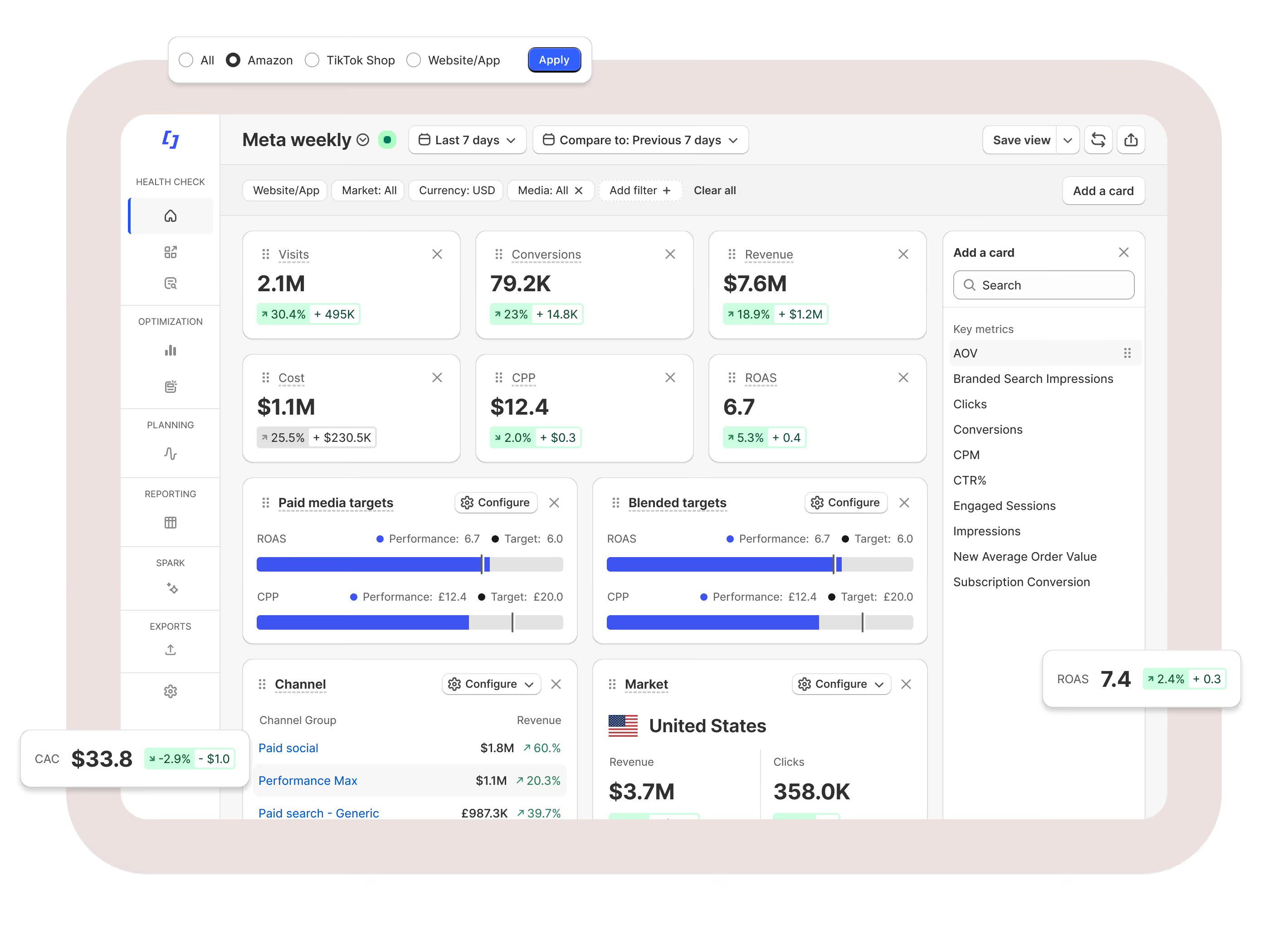

Dashboard showing weekly meta performance with metrics including visits at 2.1M, conversions 79.2K, revenue $7.6M, cost $1.1M, CPP $12.4, ROAS 6.7, channel revenue, and market data for the United States.Text box stating conversions increased by 23% in the last 7 days, leading to a 2.9% decrease in CAC.Line graph showing revenue increasing with spend, with a solid blue line above a dashed gray line and a shaded confidence interval around the blue line.

Core: Daily measurement

Always-on Daily MMM — every channel, down to the ad level
Fospha delivers impression-led measurement that refreshes daily, powered by advanced modelling and seamlessly integrated data.

Unlike traditional MMMs that lag behind decision-making, Fospha provides always-fresh, cross-channel insights - right down to ad-level. It does the jobs MTA can’t, accurately attributing credit across the full funnel and surfacing directly comparable CPAs across platforms like Meta, TikTok, Google, and Amazon.

With a data pipeline powered by 100+ connectors and a team of data engineering experts, Fospha unifies your Web, App, eCommerce, Sales, and Marketing data to reveal what’s truly driving incremental growth, from impression to revenue.
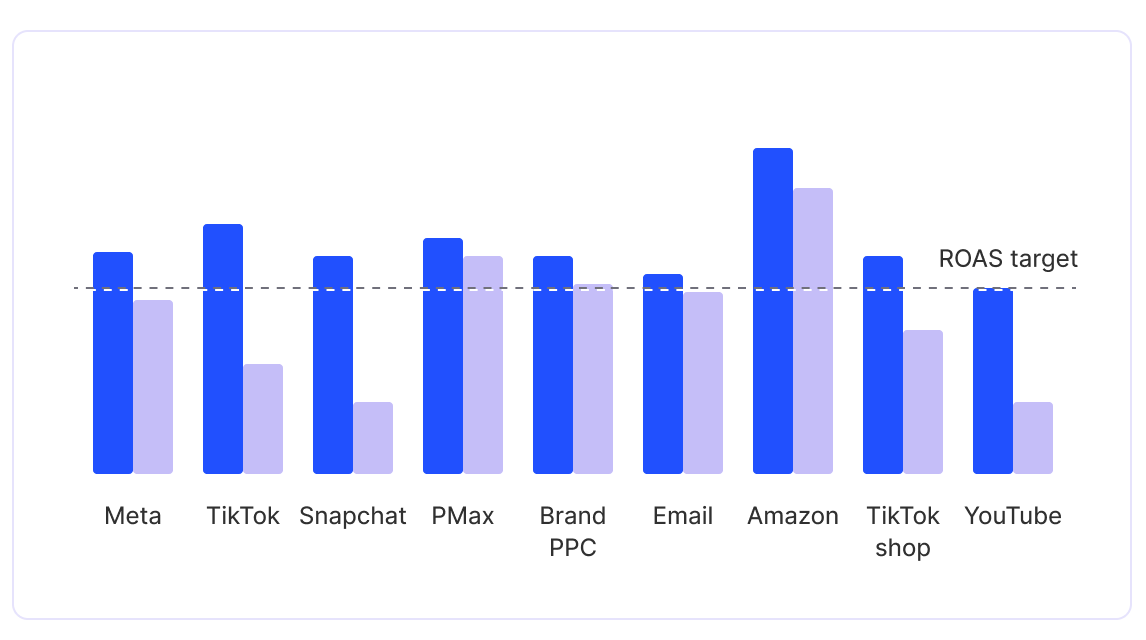
Bar chart showing ROAS performance for Meta, TikTok, Snapchat, PMax, Brand PPC, Email, Amazon, TikTok shop, and YouTube, with two bars each comparing actual ROAS against target, and a dashed line indicating the ROAS target.
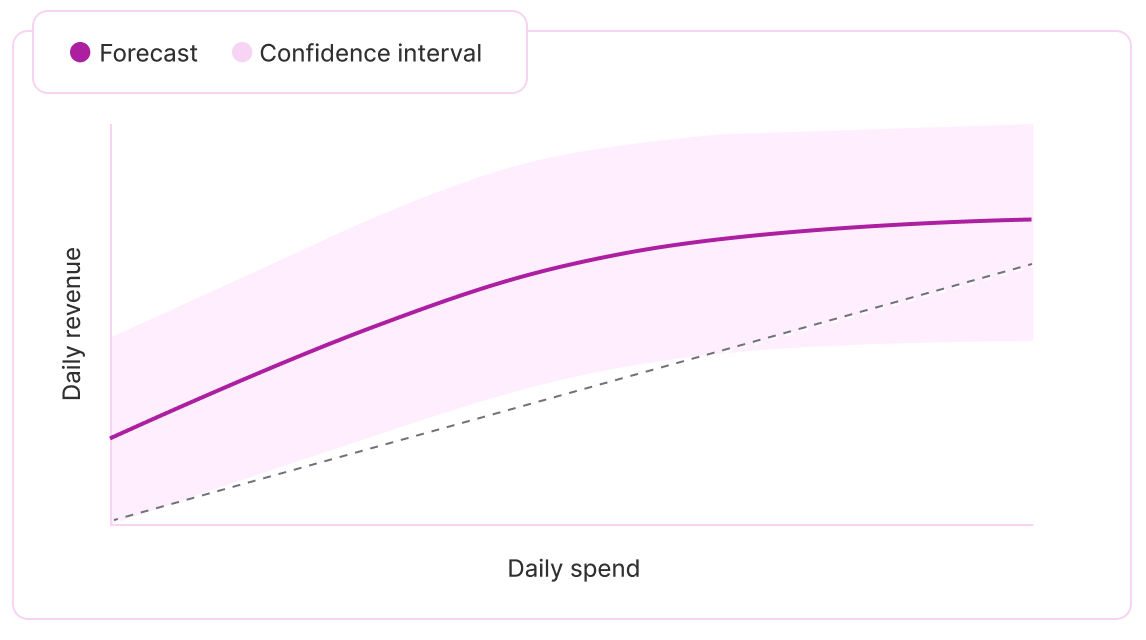
Line graph showing forecasted daily revenue increasing with daily spend, with a confidence interval shaded in light purple around the forecast line.

Beam: Incremental forecasting

Incremental forecasting that drives smarter budget decisions
Beam uses causal inference to predict the incremental return of every next dollar spent. See exactly where there’s headroom to grow and pinpoint the moment returns begin to taper off, so every dollar works harder.
With precise insights into diminishing returns and profitable scale points, finance, performance, and growth teams gain the confidence to plan budgets, reallocate effectively, and drive ROI - every time.

Halo: Marketplace measurement

Break down measurement silos to deliver holistic, top-line growth.

Most measurement tools stop at Brand.com, ignoring the halo effects across marketplaces. Halo shows how your paid media contributes to sales on Amazon, TikTok Shop, and retail channels.

Halo delivers Unified Measurement — with ROAS and acquisition metrics that platform-reported data can't produce. You’ll see how Meta campaigns drive Amazon sales, how TikTok Shop contributes to .com - so that you can set budgets effectively for total revenue impact.
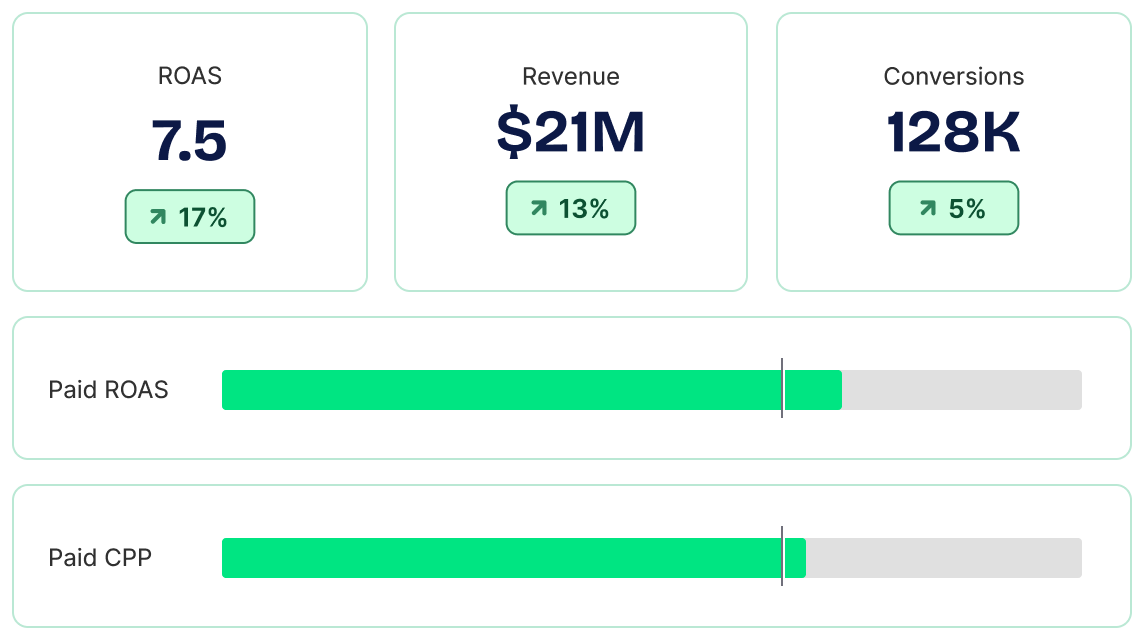
Dashboard showing Unified ROAS 7.5 up 17%, Unified revenue $21M up 13%, Unified conversions 128K up 5%, with progress bars for Unified paid ROAS and Unified paid CPP.
Line graph showing steady trends for engaged visits and average order value in UK offline brand activation with labels and a callout box.

Glow (beta): Brand measurement

Prove the short and long-term impact of your brand spend.

Using causal modeling, Glow links awareness spend to short-term signals like branded search and engaged visits, then connects those signals to long-term gains in baseline sales, AOV, and ROAS. It shows which channels and creatives build brand equity, forecasts the long-term impact of brand campaigns, and identifies early signals of success without waiting six to ten months.

Glow translates brand performance into metrics your whole business understands, bridging the gap between upper-funnel investment and bottom-line impact.

Spark AI: Ask Fospha

Intelligence that sharpens insight and saves time
Spark AI is Fospha's intelligence layer designed to get the right data to the right people, faster.

Inside the platform, Ask Fospha surfaces performance shifts, flags optimization opportunities, and handles the analysis jobs that slow marketers and analysts down.

Outside it, Spark connects Fospha's measurement directly to the AI tools your team already uses, like Claude and ChatGPT. Ask a question and get an answer in seconds, using the same data that's in your dashboard. Actionable for everyone, not just the people with a login.
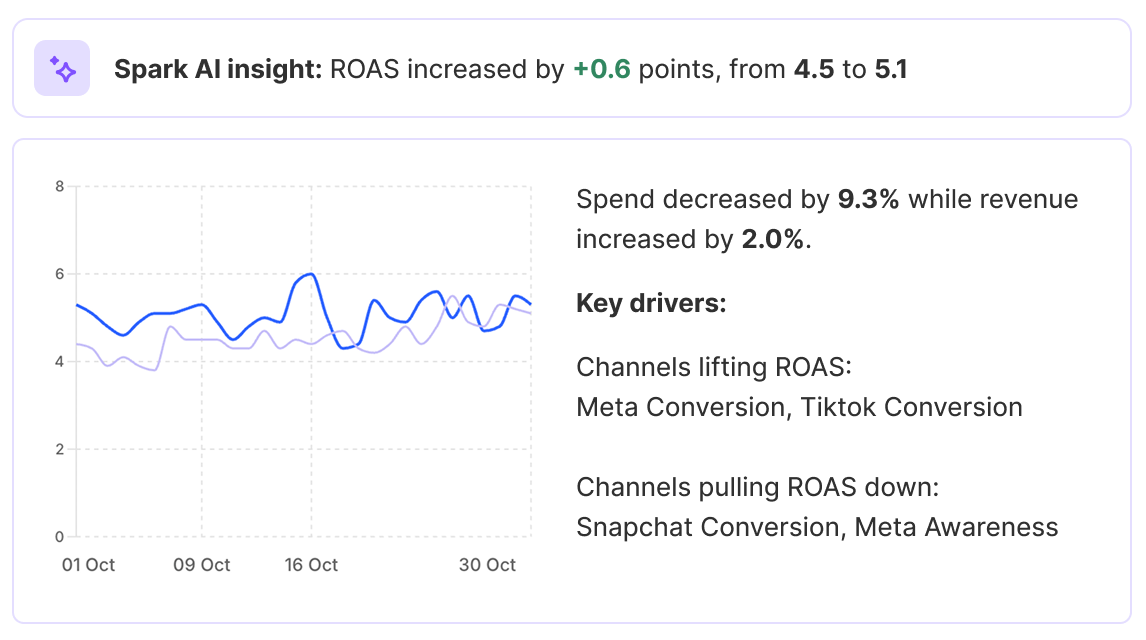
Insight showing ROAS increased by 0.6 points from 4.5 to 5.1, with spend decreased by 9.3% and revenue increased by 2%. Meta Conversion and Tiktok Conversion raised ROAS, while Snapchat Conversion and Meta Awareness lowered it, alongside a line graph of ROAS trends in October.

Glass-box science:
transparent measurement you can trust

Advanced marketing measurement doesn’t need to be a black box. The Glass Box is Fospha’s commitment to transparency, showing exactly how our models work, how they’re validated, and how they learn over time.
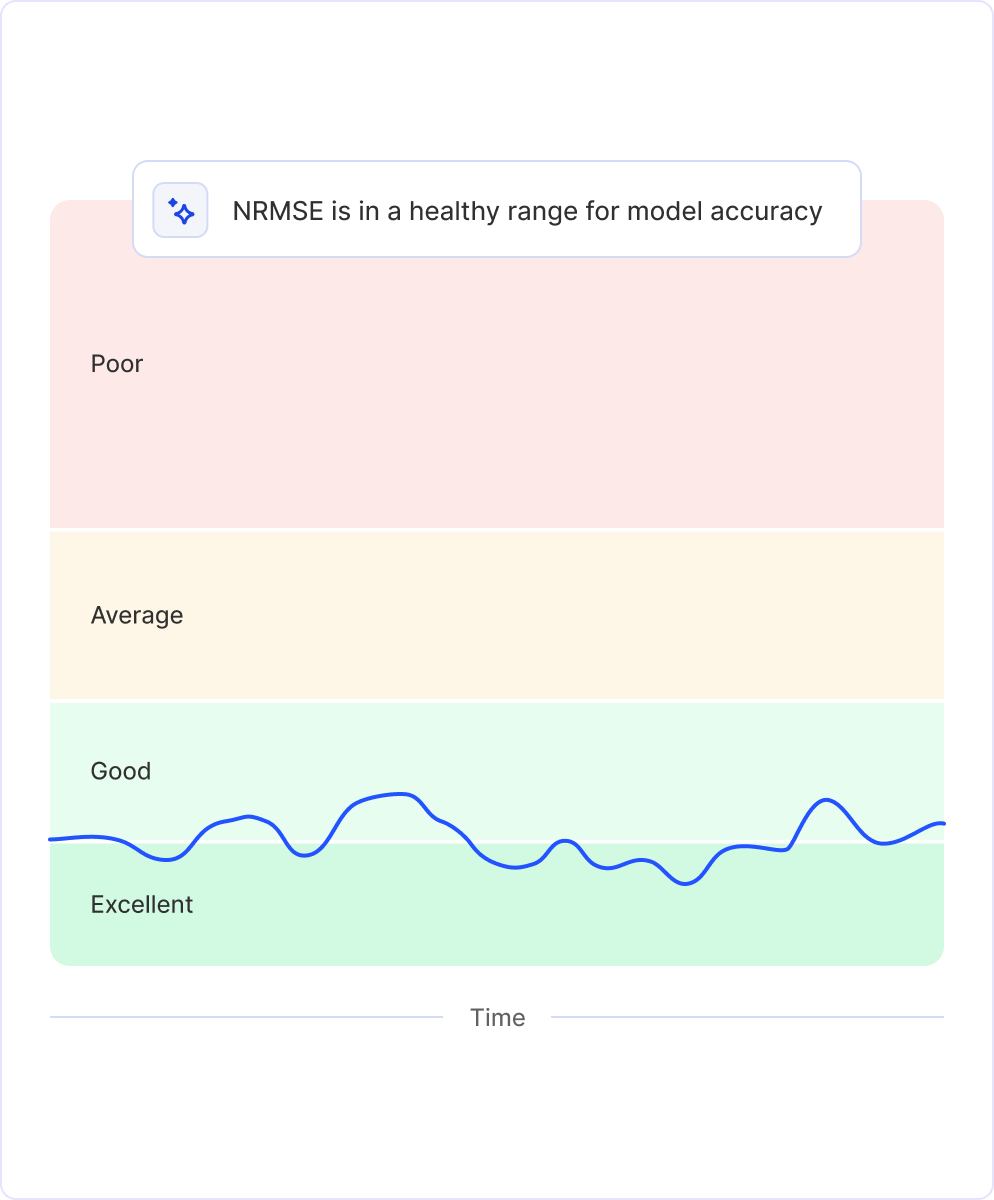
Backtested for Trust
Daily Retraining & QA
Model Accuracy Surfaced

Hundreds of leading retail brands trust Fospha's Measurement OS

From scaling DTC brands to global enterprise retailers — Fospha's Measurement OS delivers the daily signal teams trust for their most important budget decisions.
Read our clients’ success stories
"Fospha is the most important tool in our marketing stack. By using Fospha to guide spend, Huel grew new customer revenue by 54% in just 6 months."
Ollie Scheers
CTO
"Fospha gives us a level of insight that click-based measurement just can't provide. With Fospha's data we can make faster decisions, push budgets further, and get better results."
Olly Hudson
CMO
Fospha has been super helpful in helping Nest clients understand the value of social, upper funnel investment and emerging channels like TT, Pin and Snap."
Luke Jonas
Co-Founder
“Fospha has been a game changer for understanding how our paid media channels are performing.”
Will Wilkie
Senior Digital Marketing Manager
“Fospha has become a crucial part of how we guide strategy and make investment decisions—especially in upper-funnel channels like YouTube. It helps us clearly connect media spend to business outcomes, and that clarity plays a part in helping unlock investment and confidence across the business.”
Elvis Mugera
Paid Media Lead, River Island
"Fospha empowers brands to unlock extraordinary growth by quantifying hidden opportunities and delivering daily, actionable insights. It enables you to invest your media spend where it truly matters - reducing inefficiencies and driving transformative results."
Dan Sava
Founder
"Introducing an impartial, full-funnel tool to come in and 'mark Google's homework' really helped us justify our increased investment in PMAX & Paid Search. We report on Fospha numbers weekly in our exec meetings now."
Jamie Degiorgio
Head of Performance Marketing
“We knew Snapchat had value but we couldn’t really prove it. With Fospha, we finally had the visibility we needed to invest in Snapchat. Now it's one of our top-performing channels.”
Sean Carpenter
Head of Digital Marketing
"Glow was the missing piece of the puzzle for us in understanding why AOV was moving in ways we had never been able to explain before. It has absolutely shaped the way we think."
Jon Grail
Director of Growth
"Halo really helps us with overall with event planning, campaign planning, and investment choices. It provides data that previously was a gap for us, so we can better plan and promote a key sales channel."
Calvin Lammers
GM of Digital
"Fospha gave us the data confidence we needed. For the first time, we could clearly see how our TikTok Shop spend was influencing performance across our business."
Phoebe Powell
Paid Social Strategist
‍“Every time management challenged the numbers, I could open Fospha to prove what was really happening. Over time, Fospha became our source of truth for digital performance.”
Rabee Sabha
Digital Marketing Manager

Stay ahead with the inside scoop from Fospha.

For over 10 years, we've been leading the change in marketing measurement.

Ready to measure the full funnel and grow?

See where to grow next

FAQs

How do you measure model accuracy?

The short answer

Model accuracy in a marketing mix model is not a single number - it is a framework of complementary signals evaluated continuously. The three core components are nRMSE (Normalized Root Mean Squared Error), which measures predictive error; R², which reflects how well the model explains historical variance; and back-testing, which validates at key checkpoints whether the model generalizes reliably to data it has not seen. No single metric is sufficient on its own. Used together, and monitored over time rather than at a single point, they give a robust and transparent picture of model performance.

Marketing mix models guide some of the largest budget decisions a performance team will make. The natural question follows: how do you know the model is actually accurate? And how do you make that accuracy visible and verifiable to finance, leadership, and external stakeholders?

Accuracy, properly measured, requires multiple complementary perspectives - different metrics reveal different things about how a model is performing.

Why does measuring model accuracy require more than one metric?

Evaluating a model's accuracy comes down to two distinct questions that pull in different directions.

The first is how well the model learns from historical data - how closely its outputs match the patterns already in the training set. The second is how well it performs on data it has not seen - whether the relationships it has learned hold up in genuinely new periods.

These two questions reflect what is known in statistics as the bias-variance tradeoff. The bias-variance tradeoff is the tension between a model that learns too rigidly from historical data and one that is too loose to be reliable - finding the right balance is central to building models that perform consistently on new data. A model that fits historical data too closely tends to absorb noise rather than meaningful structure - and when the environment shifts, its predictions become unreliable. A model with a slightly imperfect fit on training data can be the more reliable choice if its predictions remain stable on genuinely new periods.

This is why a sound accuracy framework uses both performance metrics, such as nRMSE and R², and out-of-sample validation through back-testing. Each provides a signal the others cannot.

What does each accuracy metric actually measure?

Normalized Root Mean Squared Error (nRMSE) is a measure of predictive error - how closely the model's predictions align with observed outcomes. It is calculated by dividing RMSE by the mean of observed outcomes, which makes the metric comparable across brands and scales. Other normalization conventions exist, such as using the range or standard deviation, so it is worth confirming definitions when comparing providers.

Normalized Root Mean Squared Error (nRMSE)

nRMSE is most usefully read as a trend rather than a single number. A low, stable nRMSE time series is a strong signal of dependable predictive performance. A rising or erratic nRMSE trend may indicate the model is drifting or that the underlying data environment has shifted - a signal worth investigating.

represents the proportion of variation in the outcome that the model can explain based on its inputs. A practical way to read it: an R² of 0.90 means the model accounts for roughly 90% of the rises, dips, and shifts in your historical sales data.

R² reflects in-sample fit - how well the model captures patterns in the training data - rather than predictive accuracy on new data. In time-series settings, R² can appear artificially inflated due to trends, seasonality, non-stationarity, or data leakage, so it is best read alongside out-of-sample metrics such as nRMSE. High R² with weak predictive accuracy can indicate over-fitting. Moderate R² with strong predictive accuracy can reflect a well-calibrated model operating in a genuinely complex, noisy environment.

Back-testing is a form of out-of-sample validation that evaluates how well the model generalizes to unseen future periods, preserving the time order of the data. It is typically run at key checkpoints - such as model build or retraining - rather than as a continuously updated signal. At its simplest, it involves comparing model performance between the periods it learned from and the future periods it has not seen. If performance degrades on the unseen periods, it may indicate over-fitting or instability. If performance remains consistent, it suggests the model has learned meaningful structure rather than memorizing historical noise. Back-testing adds a layer of confidence that the model will behave reliably in real-world, forward-facing conditions.

Inside the Glassbox

Accuracy is a continuous discipline at Fospha, not a one-time check. This sits inside Glassbox - Fospha's commitment to full transparency across every modeling layer. Every model layer, validation step, and metric is open to inspection. Customers can see how the ensemble model is constructed, how different measurement components contribute (click measurement, impression measurement, post-purchase, halo), the validation metrics behind every prediction, and the daily, ad-level outputs those decisions rely on.

Building the Full Funnel View

In practice, each modeling cycle follows a structured loop: data refresh and retraining; evaluation on held-out periods to assess generalization; ongoing monitoring of nRMSE and R² to track predictive error, model fit, and stability over time; and transparent reporting, with accuracy measures available to customers on request.

nRMSE is computed daily for every model Fospha runs, including click-based components and impression-based MMM, so performance is continuously visible. Accuracy metrics are available to customers on request and typically shared via their CSM, complete with plain-English definitions and guidance, so model health is straightforward to understand and verify without requiring statistical expertise.

Healthy accuracy ranges are brand-specific and derived empirically. The goal is not a single universal benchmark, but a stable band for each brand that signals the model is learning meaningful structure and generalizing reliably over time.

Common questions

Q: What is a good nRMSE score for a marketing mix model?

There is no universal benchmark - healthy nRMSE ranges are brand-specific and derived empirically based on the data environment and business context. The more useful signal is the trend over time: a low, stable nRMSE series indicates dependable predictive performance, while a rising or volatile trend warrants investigation. A single low score at one point in time is less informative than consistent stability across many measurement periods.

Q: Can R² alone tell me if my MMM is accurate?

No. R² reflects in-sample fit - how well the model explains historical patterns - but it does not tell you whether those relationships will hold on new data. In time-series settings, R² can be artificially inflated by trends, seasonality, non-stationarity, or data leakage. A high R² alongside weak out-of-sample performance is a sign of over-fitting. R² is best read alongside predictive accuracy metrics such as nRMSE and validated through back-testing.

Q: What is back-testing and why does it matter for MMM?

Back-testing is out-of-sample validation that checks whether a model generalizes beyond the data it was trained on. It works by evaluating model performance on future periods the model has not seen, preserving the time order of the data. If performance degrades significantly on those unseen periods compared to the training period, it may suggest the model has over-fitted to historical noise. Consistent performance across both periods is a positive indicator that the model has learned genuine, stable structure - and is more likely to produce reliable outputs in real-world conditions.

Q: How often should model accuracy be monitored?

Continuous monitoring is more reliable than periodic checks. Marketing environments shift - media mix changes, spending levels fluctuate, audience behavior evolves. A model calibrated under one set of conditions may drift as those conditions change. Tracking metrics such as nRMSE on a daily basis, rather than waiting for quarterly model refreshes, makes it possible to detect and address emerging issues early.

Related reading

Can an MMM provide reliable guidance at the ad or creative level?

The short answer

A pure Media Mix Model is not designed to evaluate individual creatives - the statistical conditions required for that level of precision rarely exist. But that does not mean creative decisions should be made without full-funnel context. A modern Daily MMM, scoped to the right level and combined with platform-native signals, can provide reliable directional guidance for creative prioritization without overstating what the data can support. The goal is better decisions, not more granular numbers.

Creative is one of the most actively managed levers in paid media. Decisions about which ads to scale, which concepts to cut, and which formats are building demand versus capturing it happen every week, if not daily. The question most performance teams eventually ask is: can our MMM help us make those calls more accurately?

The answer is nuanced, and getting it wrong in either direction creates real problems. Dismiss the question entirely and creative decisions get made on click-based signals that have well-documented limitations which  compound over time. Overstate MMM precision at the ad level and the outputs become unstable, eroding the trust the measurement function depends on.

Why does a pure MMM struggle at the individual ad level?

A Media Mix Model (MMM) is a statistical technique that uses aggregated input and outcome data to estimate the contribution of different marketing activities to revenue. It is designed to detect patterns that are visible at the level of channels, objectives, and time periods - not individual ads.

Three structural constraints explain why extending a pure MMM to the creative level tends to produce unreliable outputs.

  1. Parameter growth. Introducing hundreds or thousands of individual creatives into a model dramatically increases the number of parameters it must estimate. Without enough independent variation in the data to support each parameter, the model becomes unstable - small changes in inputs produce large swings in outputs.
  2. Correlation within platforms. Creatives within the same platform tend to move together. They share budgets, targeting, auction dynamics, and delivery systems. This makes it statistically difficult to separate the relative contribution of individual ads from aggregate campaign performance.
  3. Cadence mismatch. Many traditional MMMs refresh on monthly or quarterly cycles. Creative performance changes much faster than that. Insights that arrive six weeks after a campaign has rotated out are not useful for the creative decisions being made today.

For these reasons, applying a pure MMM directly at the ad level is generally not statistically reliable.

Why does full-funnel context still matter for creative decisions?

The limitation of pure MMM at the creative level does not make full-funnel measurement irrelevant to creative decisions. It makes it essential.

Without full-funnel context, creative performance is easy to misread:

  • A prospecting video may reduce site conversion rate while actively contributing to broader demand generation. Click-based signals will penalize it; full-funnel measurement will credit it correctly.
  • An upper-funnel creative may appear inefficient in platform reporting while influencing downstream revenue across a longer window.
  • Two creatives may look similar in-platform yet behave very differently once cross-channel effects are accounted for.

Teams that rely solely on lower-level signals tend to bias their decisions toward demand capture. They optimize toward what is easiest to measure, not what is most effective. The result is a media mix that is typically underweighted toward upper-funnel and demand generation channels.

How does a modern daily MMM approach the ad level?

The answer is a deliberate hybrid, where each signal does the job it is best suited for.

MMM at the level it is strongest. Fospha's Daily MMM focuses cross-channel, full-funnel measurement at the campaign type or objective level across platforms and markets. At this level, there is sufficient independent variation in the data to produce outputs that are stable over time, comparable across channels, and suitable for budget and planning decisions.

Platform signals for finer-grained views. Below the campaign level, the signal changes. Publishers have strong visibility into engagement, delivery, and auction dynamics within their own platforms. Fospha uses these intra-platform signals to allocate campaign-level MMM outputs down to individual ads.

The result is ad-level views that are:

  • grounded in cross-channel, full-funnel measurement
  • informed by platform-native signals where those signals are most reliable
  • consistent enough over short operating windows to support prioritization decisions

These views are designed for decision support, not for precise estimation of individual ad effects. The distinction matters. Decision support tells you which creatives are worth scaling and which should be rotated out, within a frame that reflects total business impact. Precise estimation makes claims about individual ad contribution that the data simply cannot support at that resolution.

How Fospha's Core separates measurement from allocation

Fospha's Core, the always-on Daily MMM, addresses this by clearly separating where measurement is most reliable from where allocation and prioritization are more appropriate.

At the campaign type and objective level, Core provides cross-channel, full-funnel measurement with the statistical stability needed to inform budget decisions. This is the frame teams use to understand whether their creative investment is building demand or primarily capturing existing intent.

At the ad level, Core allocates campaign-level measurement outputs using platform-native signals, producing directional views that are grounded in full-funnel context without overstating precision. A creative that looks inefficient in last-click reporting gets evaluated in the context of what the MMM shows is happening across the full channel path.

The practical outcome is that creative teams can make rotation, scaling, and investment decisions with more than just in-platform data behind them, and with less risk of undervaluing the upper-funnel formats that drive long-term growth.

Common questions

Q: If MMM can't precisely measure individual ads, does that mean ad-level data from an MMM is unreliable?

Ad-level outputs from a well-designed hybrid MMM are reliable for directional decisions, but they should not be treated as precise point estimates of individual ad contribution. The appropriate use is prioritization and rotation decisions within a full-funnel frame, not granular performance measurement at the creative level. The distinction between decision support and precise estimation is what makes the outputs trustworthy.

Q: What happens if a team relies only on platform signals for creative decisions?

Platform signals are useful for understanding delivery dynamics and in-platform engagement, but they have predictable blind spots. They bias decision-making toward demand capture - the bottom-funnel activity that is easiest to observe. Upper-funnel and prospecting creatives are typically undervalued. Teams that rely heavily on these signals risk improving in-platform metrics while reducing broader marketing efficiency, particularly if upper-funnel spend is cut in the process.

Q: How often does ad-level measurement need to update to be useful for creative decisions?

Creative performance changes quickly - campaigns rotate, budgets shift, auction dynamics evolve week to week. Measurement that refreshes quarterly arrives too late to inform the decisions that have already been made. Daily MMM updates, which are standard in Fospha's Core, close the gap between when something changes in the media mix and when measurement reflects it. For creative decisions, daily cadence is the difference between acting on current data and optimizing against a picture that is already out of date.

Can I access Fospha data through my AI tools?

Yes. Fospha MCP connects your Fospha measurement directly to AI tools like Claude and ChatGPT - so you can ask questions about your performance data in plain language and get answers back in seconds, using the same data that's in your Fospha dashboard. No login required.

MCP works with Claude and Cursor today, with ChatGPT and Perplexity coming next. You'll need an enterprise AI account (Claude for Work, ChatGPT Enterprise, or equivalent) to connect it.

Speak to your account manager to get set up.

What does the Fospha onboarding process look like?

Getting started with Fospha is quick and painless—most of our clients are up and running in less than 28 days with minimal effort.

All we need is admin access to your ad accounts, Google Analytics, and eCommerce platform—no coding or IT department needed!

Here's how it works:

- Initial Setup (about 3 hours): We'll help you connect your data through our easy-to-use onboarding portal.

- Data Validation (1-2 weeks): We'll verify your connections while you review initial insights for accuracy.

- Go-Live (by Day 28): You're all set! Full platform access with 24 months of historical data immediately available.

Your team includes an Onboarding Specialist for setup, a Customer Success Coordinator for ongoing support, and an Account Manager to help turn insights into growth opportunities

How long does it take to get started with Fospha?

Fospha delivers the fastest time-to-value in marketing measurement, with most clients fully live in under 28 days.

Your onboarding timeline:

- Setup (3 hours): Connect your ad platforms, GA4, and eCommerce data via our easy-to-use Onboarding Portal.

- Data Validation (1-2 weeks): We reconcile and verify your data for accuracy, ensuring seamless measurement.

- Go-Live (by Day 28): Access 24 months of historical data from day one and start optimizing your performance immediately.

How do I know your model is accurate?

We take accuracy seriously. Our model undergoes daily quality checks to ensure reliable, fair measurement you can trust. Here's how we ensure accuracy:

- Data Validation First: Before anything enters our model, we verify your tracking is consistent across platforms, identify any gaps between channels, and run daily checks to confirm outputs align with expected patterns.

- Historical Back-Testing: We prove our value by showing how our model would have accurately predicted your past performance trends, giving you confidence our recommendations are reliable.

- Outlier Capping: During major sales events like Black Friday, ad platforms typically over-claim credit. Our system automatically adjusts the outputs on high-traffic days to maintain a fair picture of what's really driving results.

Is Fospha privacy safe?

Yes, Fospha is built for privacy-first measurement, today and in the future.

For 10+ years, we've led the shift away from pixel-based tracking, building our solution to meet global privacy standards like GDPR, CCPA, and iOS14+, and preparing for changes like Google’s Privacy Sandbox.

Here’s how we do it:

No third-party cookies or user-level tracking: Our model doesn’t rely on personal identifiers or outdated tracking methods

- Privacy-first by design: Fospha combines always-on measurement signal with Daily MMM to restore visibility lost to privacy changes—without compromising compliance

- Proven compliance: Trusted by global brands across the US, UK, and EU, Fospha meets the highest privacy standards

How is Fospha different from traditional MTA, MMM, and other marketing measurement solutions?

Fospha uniquely combines the best of both worlds by unifying always-on measurement signal with Daily MMM - something our competitors simply don't offer.

While platform-native dashboards miss upper-funnel impact due to signal loss, and traditional MMM lacks the speed and granularity for daily decisions, we deliver:

- The granular, ad-level measurement insights for tactical optimization

- The predictive power and total channel visibility of our Daily MMM, fairly crediting both demand generation and capture channels

Our unified approach, refined through 10+ years of working with hundreds of brands, corrects the common measurement bias toward last-touch channels - properly valuing the complete channel mix from awareness to conversion.

Which channels does Fospha measure?

Fospha measures your entire channel mix, from brand awareness to conversions, giving every channel fair credit using privacy-safe Daily MMM.

We cover everything that drives growth - across web, app, and Amazon - and unify it into a single, unbiased view.

What sets us apart:

- Halo Effect: Reveal how Meta, TikTok, and Google ads drive sales on Amazon - with unified ROAS across DTC and marketplace

- TikTok Shop: Track in-app and on-site purchases together, giving you full visibility into TikTok performance beyond what Google Analytics can capture

- App Sales: We model app and web sales separately to reflect how customers behave on each platform

With Fospha, you measure what matters - no blind spots, no wasted budget, just smarter growth.

How soon will I see value from Fospha?

Immediately.

Fospha gives you full-funnel, privacy-safe measurement from day one—so you can optimize spend, measure true channel impact, and make smarter decisions faster. Here's how different teams benefit from Fospha from day 1:

For Performance Marketers & Growth Teams:

- Stop wasted spend & scale smarter – Use Spend Strategist to forecast ROAS, conversions, and revenue at different spend levels—helping you scale efficiently.

- Optimize within & across channels – Get ad-level insights to improve performance and shift budgets strategically, even when direct reallocations aren’t possible.

For Marketing & Finance Leaders:

- Confident, bias-free reporting – Move beyond last-click limitations with independent, privacy-safe measurement trusted by CMOs and CFOs.

- Smarter budget decisions – Use Spend Strategist to forecast the most efficient spend levels before committing budget.

- See the full impact of marketing – Get daily, MMM-powered insights that quantify brand-building and performance marketing together.

No blind spots, no wasted budget - just better decisions from the very start.